Document the starting condition
Photograph existing damage, record mileage and tank levels, and confirm the included inventory.
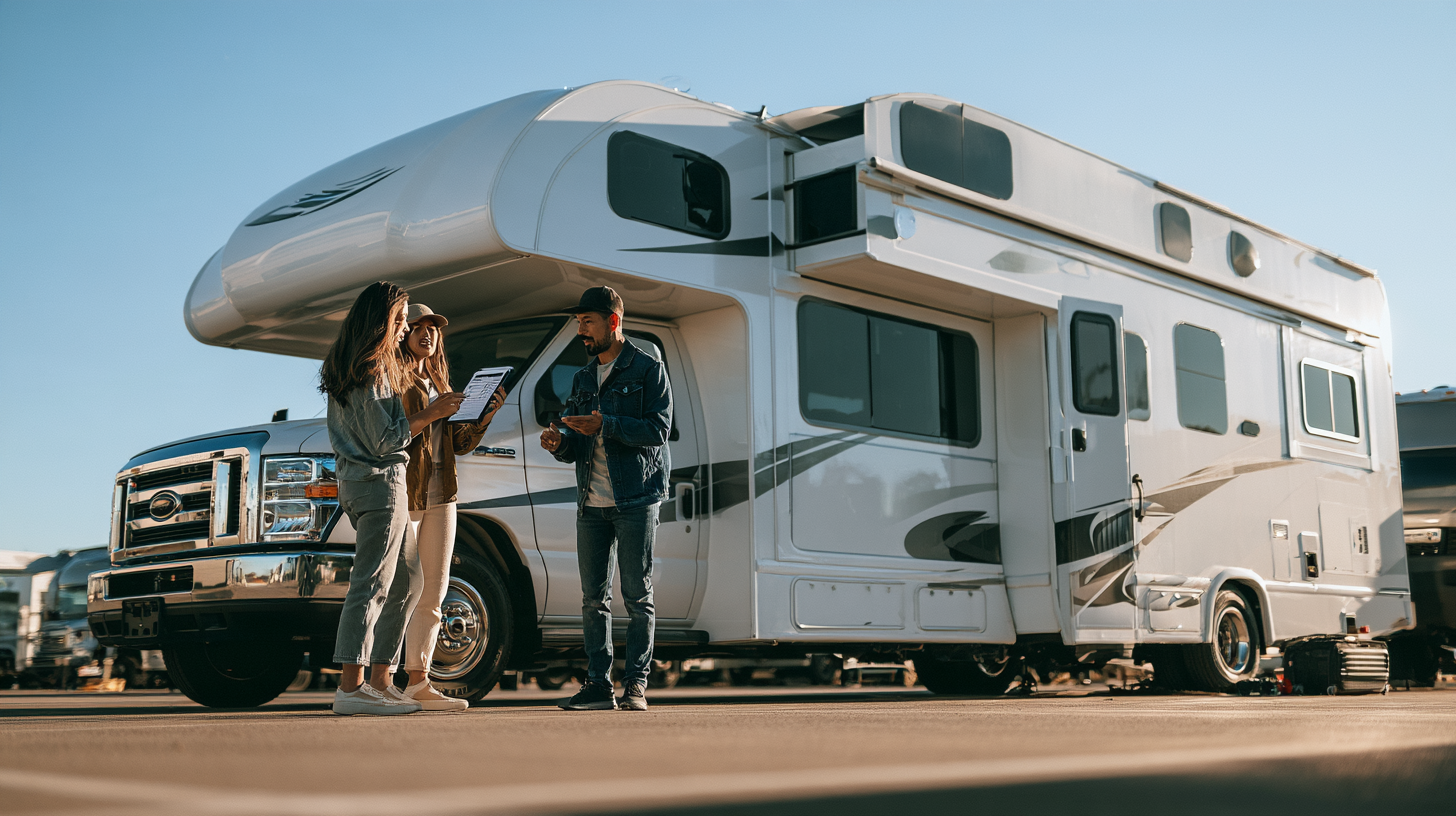
Set aside enough time at pickup to inspect the RV, document its condition, and learn the systems you will use. Do not rush through the handoff because your campsite check-in window is approaching. A careful walkthrough gives you a shared record of the RV at departure and a chance to ask the owner questions while you are standing beside the vehicle.
The short answer
Inspect and photograph the RV's exterior, interior, tires, safety equipment, controls, appliances, hookups, tank levels, mileage, and included gear before you leave. Complete the platform's departure record with the owner, practice the systems you will use, and resolve any difference between the RV and the listing while both parties are present.
Key takeaways
Photograph existing damage, record mileage and tank levels, and confirm the included inventory.
Operate the hookups, appliances, controls, slide-outs, and awning while the owner can guide you.
Inspect tires, lights, mirrors, restraints, cargo, and towing connections before entering traffic.
Save contact details and verify return time, fuel, propane, waste tanks, cleaning, and usage readings.
Confirm the pickup address, meeting time, approved driver, and anything the owner asked you to bring. Keep your driver’s license and booking information available. If you are collecting a trailer, confirm the tow vehicle, hitch, brake controller, electrical connector, and any owner-supplied towing equipment before pickup day. If you are still deciding what is manageable, compare RV types and their driving requirements. Questions about mileage, generator allowances, cleaning, or add-ons belong in the booking conversation before the handoff. Our first-time renter planning guide helps you organize those decisions.
Review the listing again and make a short list of the features you expect to find. Include beds, linens, cookware, camp chairs, hookups, and paid add-ons. The list gives you something concrete to compare against the RV instead of relying on memory. Download the RVezy app and make sure you can open the booking details before you arrive.
RVezy’s current booking and RV handover guidance says that the approved driver must be present and that both parties complete the departure inspection in the app. The inspection records the vehicle’s condition, photos, tank levels, and odometer reading. Follow the instructions shown in your booking because platform procedures can change.
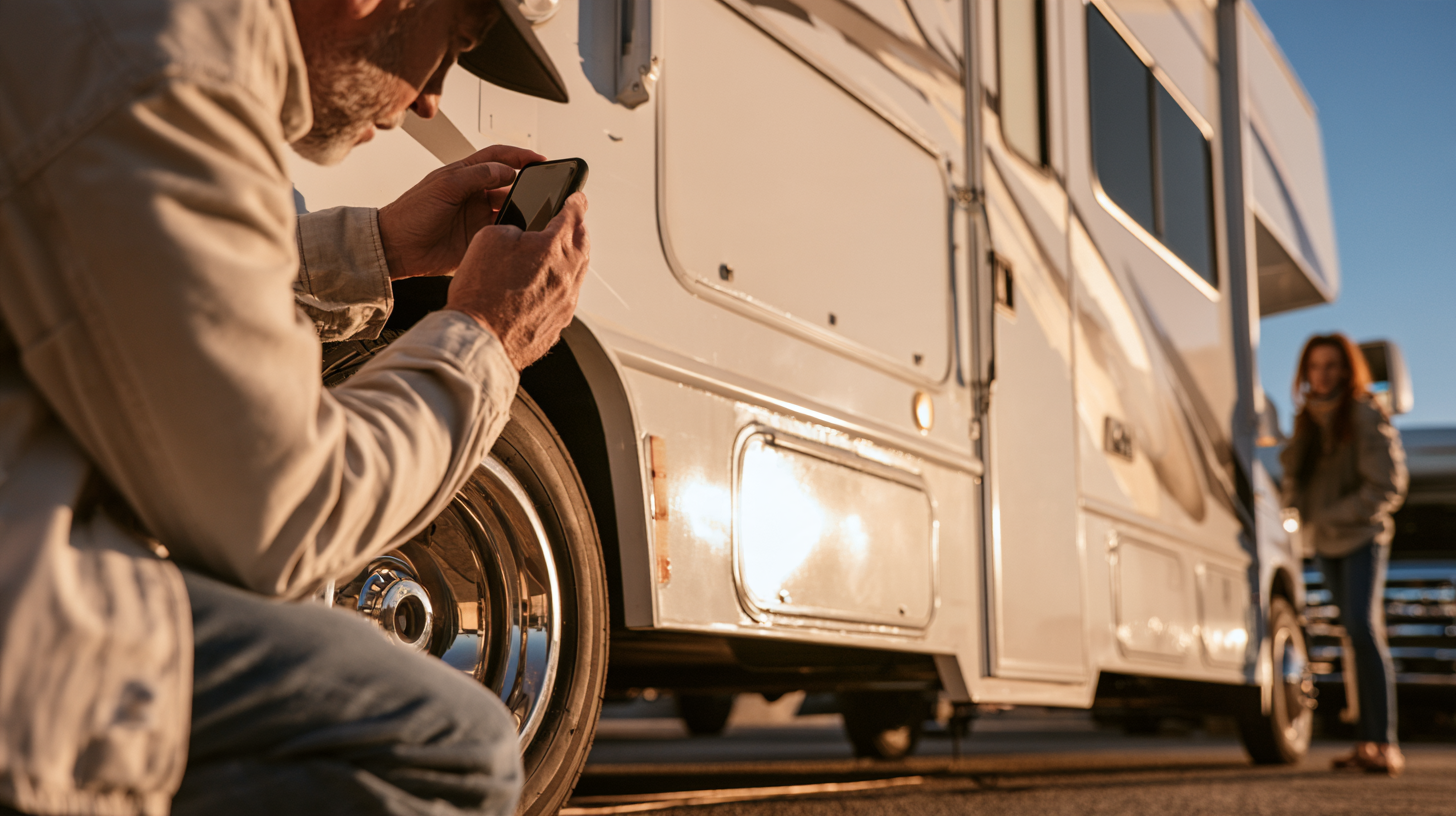
Walk around the RV in daylight when possible. Compare each side, corner, window, door, awning, mirror, light, wheel, and storage hatch with the departure record. Look higher than eye level and along the lower panels. If you see a scratch, crack, stain, loose part, or missing item that is not already recorded, point it out before departure and add it through the required check-in process.
Inside, check floors, counters, upholstery, cabinet doors, window coverings, appliances, bathroom fixtures, and mattresses. Confirm that the included inventory matches the listing or the host’s written message. Record fuel, propane, generator hours, mileage, fresh-water level, and waste-tank readings where the inspection asks for them. Those starting figures matter when the rental has usage allowances or return requirements.
Do not treat this as an attempt to find fault with the owner. You and the owner need the same clear starting record. Finish the platform inspection while both of you are present, and resolve any mismatch in the RVezy message thread so the answer stays attached to the booking.
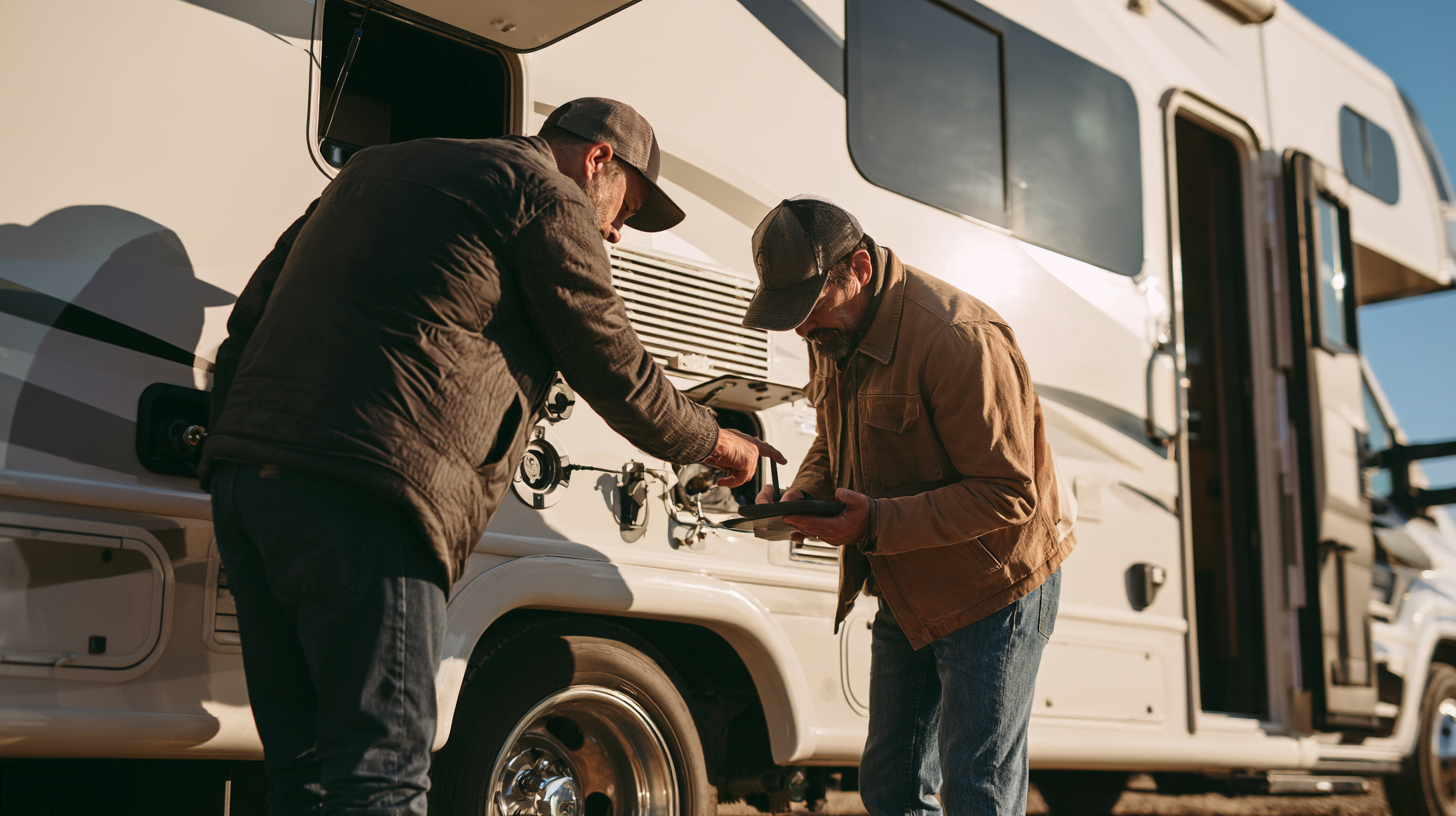
Work through the rows during the handoff. Write the owner’s answer or note where the instruction appears in the RV manual. “Shown once” is hard to remember after a long drive, so ask to repeat any step you cannot explain back.
| Pickup check | What to verify | Your note |
|---|---|---|
| Departure record | Photos, existing damage, mileage, generator hours, fuel, propane, and tank levels | Completed in the app |
| Vehicle size | Overall height, length, width, clearance concerns, and where those measurements are posted | _____ |
| Driver controls | Mirrors, parking brake, transmission, cruise control, dashboard warnings, backup camera, and fuel type | _____ |
| Tow setup | Hitch connection, safety chains, breakaway cable, brake controller, lights, and owner’s recheck procedure | _____ |
| Electricity | Shore-power connection, correct amperage, surge protector, battery monitor, generator, and breaker panel | _____ |
| Water | Fresh-water fill, city-water connection, pump, water heater, pressure regulator, and leak shutoff | _____ |
| Waste | Tank gauges, valves, hose storage, dumping sequence, required supplies, and return expectations | _____ |
| Propane and appliances | Shutoff, detector, stove, refrigerator, furnace, air conditioner, and appliance-specific limits | _____ |
| Moving parts | Slide-outs, awning, steps, stabilizers, leveling equipment, and the clear area each requires | _____ |
| Emergency plan | Fire extinguisher, exits, detectors, spare tire or roadside procedure, owner contact, and platform support | _____ |
| Return terms | Time, location, fuel, propane, waste tanks, cleaning, mileage, generator hours, and key handoff | _____ |
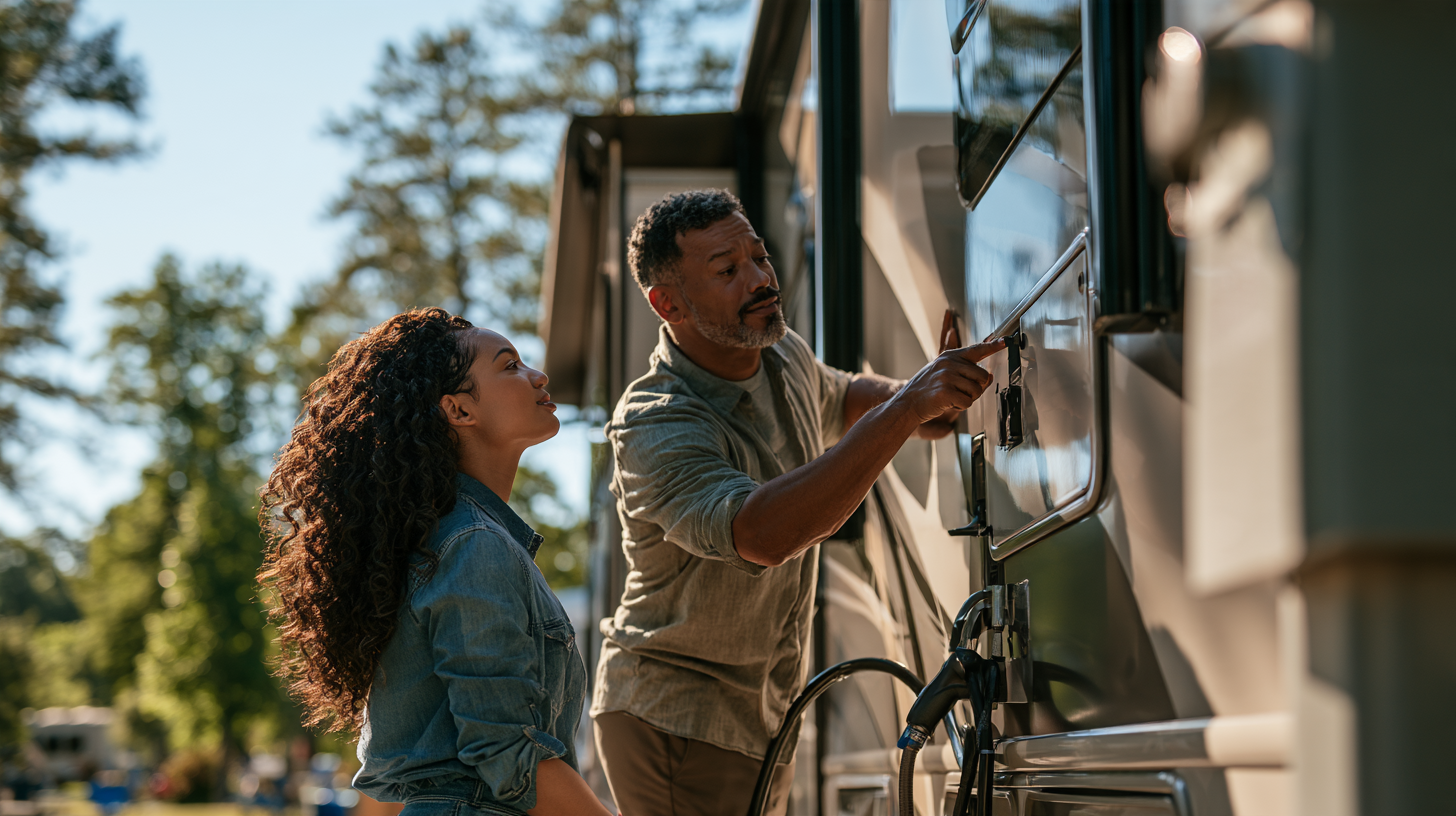
Ask the owner to demonstrate a complete campsite setup in the order you will perform it. For a motorhome, that may cover parking, leveling, stabilizing, connecting power and water, extending slide-outs, and setting up the sewer connection. For a trailer, include unhitching, wheel chocks, the tongue jack, stabilizers, and the steps required before anyone enters. Follow the owner’s instructions and the vehicle manuals rather than a generic online sequence.
Operate the controls yourself while the owner watches. Turn on a faucet, find the water pump, identify the electrical panel, check the refrigerator mode, and locate the shutoffs you may need. Ask which devices can run together on shore power or the generator. Learn the required order for slide-outs and awnings, including what must be clear inside and outside first.
Find the fire extinguisher, smoke and carbon-monoxide alarms, propane detector, emergency exits, first-aid supplies if included, and the vehicle information you would need when requesting assistance. Ask what warrants a message to the owner, what requires platform support, and what requires emergency services. Save the relevant contact details before you enter an area with weak service.
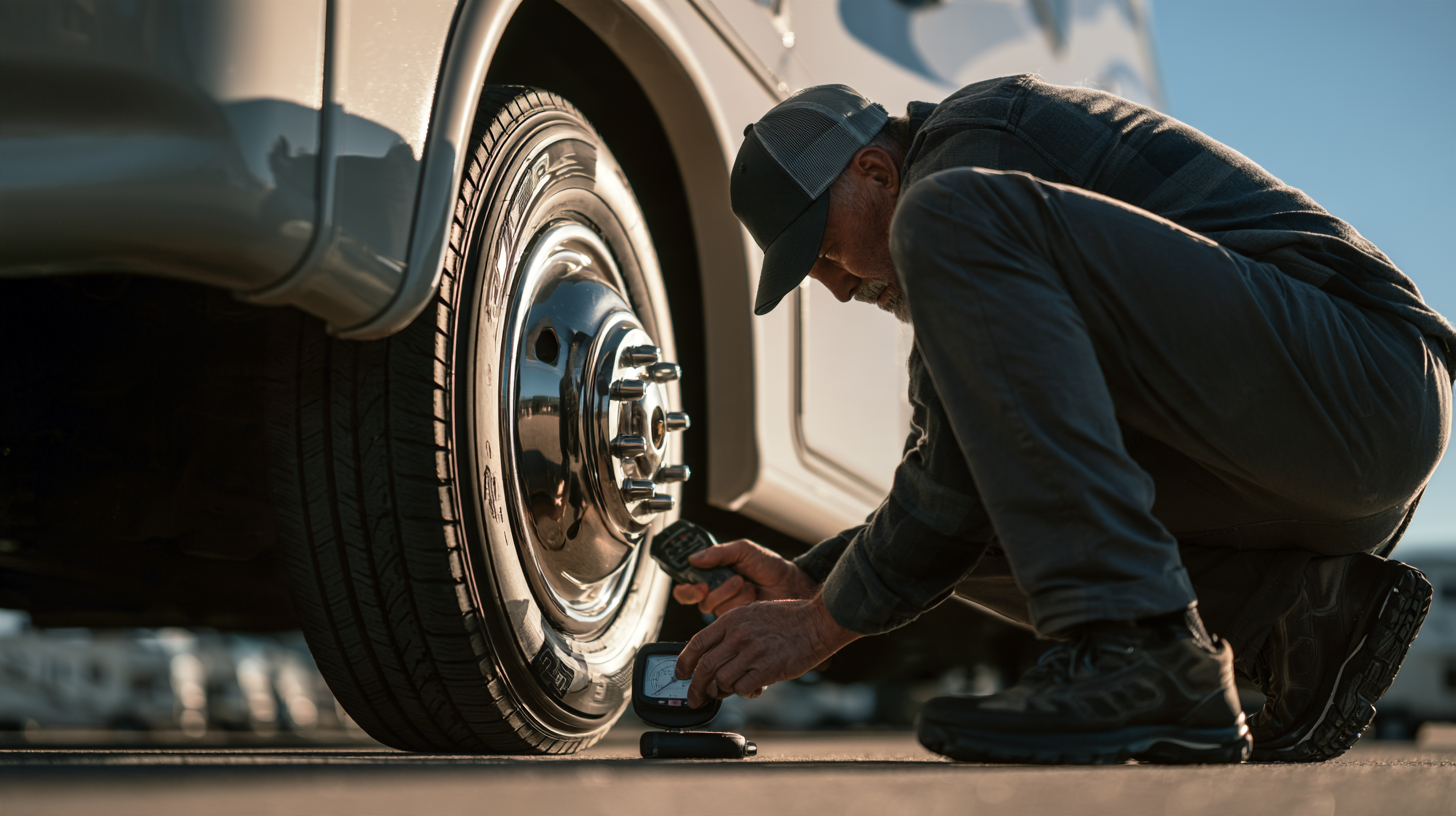
Look at the tires with the owner and ask where to find the vehicle’s tire-information placard. Check for visibly low pressure, cuts, bulges, exposed material, or other damage. The National Highway Traffic Safety Administration’s tire-safety guidance advises drivers to use the vehicle manufacturer’s recommended pressure and stay within the vehicle’s load limits. Tire pressure and load limits are vehicle-specific, so do not substitute a number from another RV or the maximum printed on the tire sidewall.
Confirm that exterior lights, mirrors, windshield wipers, seat belts, and the horn work. Ask the owner to explain any dashboard warning lights that are already present. For a towable, verify the hitch, coupler, safety chains, breakaway cable, electrical plug, trailer brakes, and running, brake, and turn lights. If you are not confident in the connection or the tow vehicle’s limits, do not leave until a qualified person resolves the concern.
Ask about the spare tire and the roadside-assistance process without assuming you should change a large RV tire yourself. Store loose equipment so it cannot move while traveling. Keep cargo within the vehicle’s limits and follow the owner’s loading instructions.
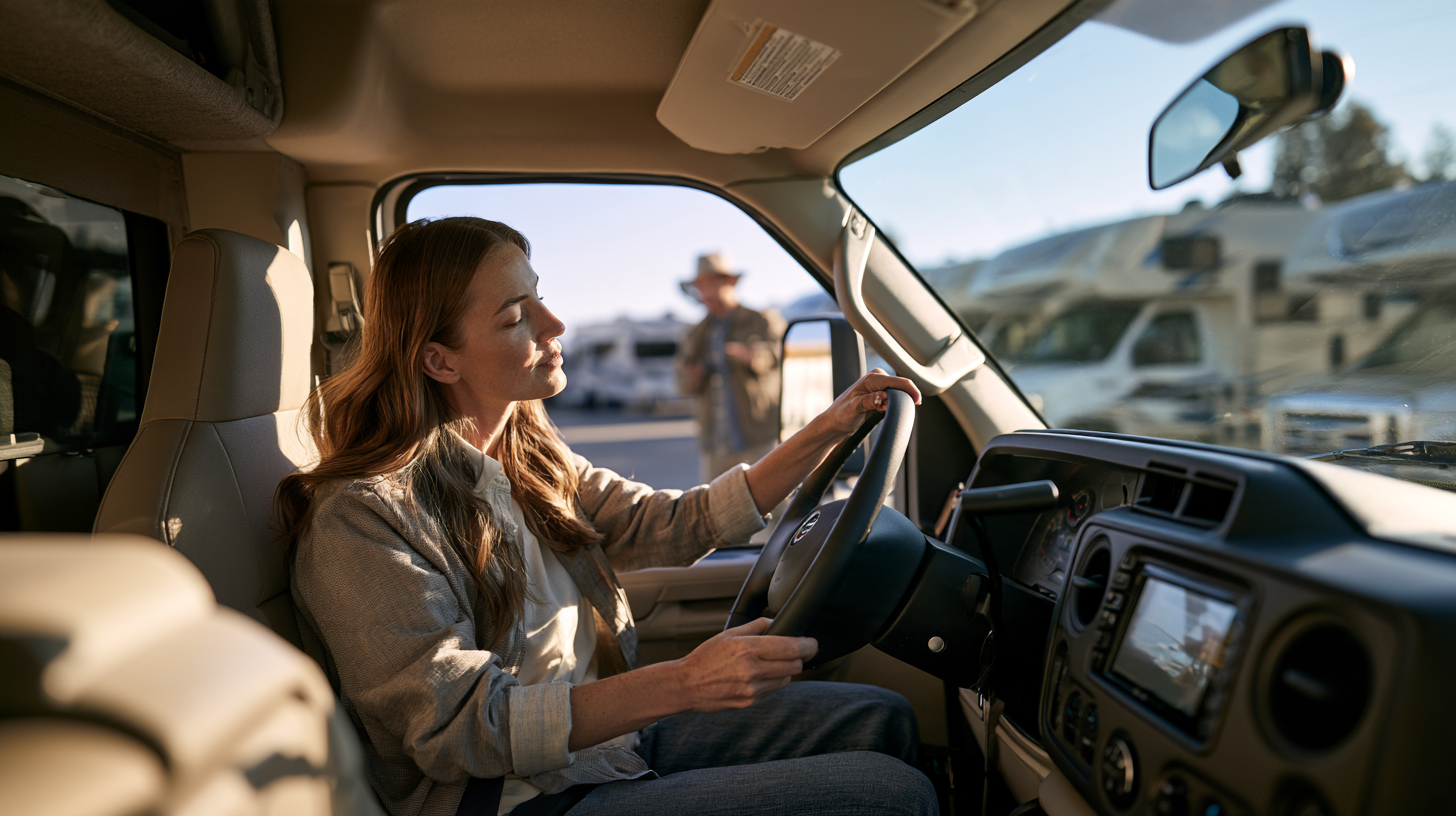
Before joining fast traffic, adjust your seat and mirrors, enter the destination, and make sure every traveler uses an appropriate designated seat and restraint. Drive a short low-speed loop if the pickup location allows it. Practice braking, turning, checking mirrors, and using the backup camera with the owner available. Listen for an unsecured cabinet, step, or item that needs attention.
Confirm the RV’s height and length before planning fuel stops, parking, tunnels, bridges, or low-clearance routes. Do not rely on a navigation app to know that the vehicle fits every road. If you are towing, allow extra space for turns and braking and follow the specific guidance for the tow vehicle and trailer.
If the owner delivers and sets up the RV, replace the driving check with a campsite handoff. Confirm the exact site, hookup status, tank readings, appliance operation, pickup time, and whether you may move the RV. Our RV rental delivery guide lists the questions to settle with both the host and campground.
Pause if the RV differs materially from the listing, required equipment is missing, a warning light appears, the approved driver cannot complete the handoff, or you cannot safely operate a necessary system. Document the issue through the platform and contact RVezy support for instructions when needed. Do not negotiate an off-platform fix or payment that changes the booking record.
Ask the owner to clarify return expectations one last time. Record the scheduled time and location, fuel or propane level, waste-tank condition, cleaning tasks, and any mileage or generator reading that will be compared at return. Use our RV rental cost guide to understand how allowances, possible fees, and overages fit into the full trip budget.
When the inspection, walkthrough, and questions are complete, save the booking record and owner contact. Then take a breath before departure. If this is your first rental, our first-time RV rental guide connects the pickup checklist with budgeting, choosing an RV, and campground planning.
This checklist supports the owner’s walkthrough and the process shown in your booking. It does not replace the vehicle manuals, platform requirements, or professional instruction for driving, towing, maintenance, or repairs.
Frequently asked questions
Allow enough time to complete the platform inspection, photograph the RV, learn the systems, and ask questions without rushing. The exact time depends on the RV and your experience, so avoid scheduling pickup immediately before a campground check-in deadline or a long drive.
Photograph every side of the RV, its roofline where visible, wheels, windows, doors, awning, storage compartments, interior surfaces, appliances, odometer, generator hours, fuel, propane, and tank readings. Add close-ups of any existing damage or missing item to the required departure record.
Ask for a hands-on demonstration of driver controls or the towing setup, shore power, water, waste tanks, propane, appliances, heating and cooling, slide-outs, awning, leveling equipment, safety devices, shutoffs, and the roadside-assistance process.
Pause the handoff, document the difference in the platform, and contact the owner and RVezy support for instructions. Keep any agreement or resolution attached to the booking rather than arranging an off-platform payment or undocumented fix.